
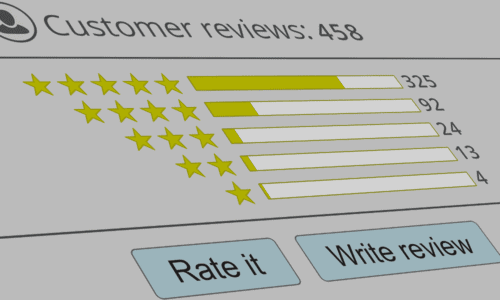
 It is a truth universally acknowledged that most people won’t try something unless someone else has tried it first. [Bonus points if you spotted the Jane Austen/ Simon Sinek mashup in that opening line!]
Think about the last time you bought something with at least a couple of zeros on the end of the price tag. You probably didn’t just go to the product page and think: “Ooh, looks good, I think I’ll click that friendly ‘buy now’ button!” Most likely, you went on the hunt for some reviews or social media comments from previous customers. This is what we call “social proof”.
So let’s start there. If you’re asking people to spend money with you, how easy have you made it for them to find out what other people think of your products and services? Do they have to leave your website and go and look somewhere else or have you integrated your social proof into your site? Or at least, signposted your website visitors or email subscribers towards the appropriate platform(s)?
Gathering social proof
“Signposted to what?” we hear you say. If you haven’t yet established a system for gathering social proof, the best time to start was yesterday. The next best time is today. This doesn’t need to be complicated: a simple email sent after purchase, asking for a review on your preferred platform, would do the job.
But what if people leave BAD reviews?!
If you’re afraid of making it too easy for people to leave reviews in case you get negative ones, read our piece about leveraging the power of online reviews. TLDR? Both good AND bad reviews can help build your business, as long as you reply constructively. If you’re brave, you can even lean in to any outrageously bad reviews, like this coffee shop owner who put a sandwich board outside his store inviting customers to try “the worst coffee one man on TripAdvisor had … in his life!”
Also, remember that with or without inviting people to leave reviews, they’re free to talk about your business online whenever and wherever they want. References to your products and services could be on Reddit, Instagram, Facebook … or any other public-facing platform. Isn’t it better to know what people are saying and to use this to your advantage?
But HOW do I use social proof to my advantage?
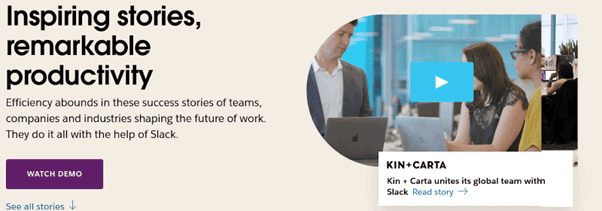
Follow the example of brands like Slack, which has a huge section on its website dedicated to customer stories. The offer of a demo is neatly integrated into the hero section, and users can either go straight to this or they can click the link below to see more stories:
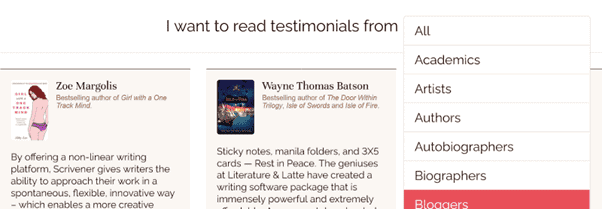
If you serve a wide range of customer groups, a powerful technique is to allow prospective customers to view the feedback of people in their ‘group’. Scrivener, which makes creative writing software, executes this strategy perfectly, by revealing their user groups and then inviting people to search testimonials by whichever group most closely represents them:

Clicking the ‘See all testimonials’ link doesn’t just ignore these groupings by showing them everything. Instead, it gives the user a drop-down menu to filter the testimonials by group.
Set up social alerts
But what about when people comment outside of your system for gathering reviews? After all, anyone can post anything they like on a social media platform.
The answer to this is to set aside some regular time for ‘social listening’, where you check your socials for any posts that have tagged you, and reshare/ reply to the original posters. This can be an amazing way to make your business more discoverable, especially on platforms like Instagram and TikTok which encourage the re-sharing of posts.
If your brand is being talked about enough to justify the fee, there are also several brand monitoring services that will send you alerts of posts that contain your brand name and any other important keywords.
By encouraging your customers to go public with their feedback, you will build a bank of reviews, testimonials and social media posts that can be powerful marketing tools for your brand.
For more help with your digital marketing, get booked onto one of our social media masterclasses, buy our Amazon bestselling book, or talk to our team.