
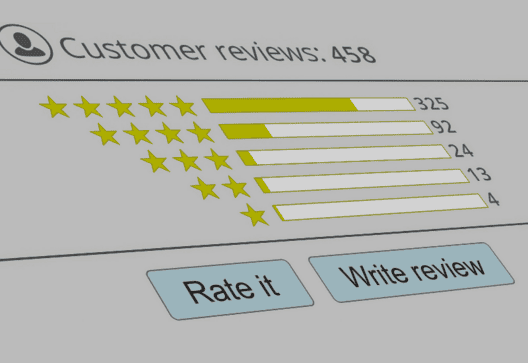
 As subject lines go, Google Business Profile’s “X left a review for [your business]” has got to be one of the most nerve-wracking. Not a hint whether it’s a five star slam-dunk or a one star cringefest. You’ve got to take a deep breath and open it to find out!
Like them or loathe them, however, online reviews – on Google and beyond – are an important part of running a business. Reviews influence potential customers’ perceptions of your brand often before they check out your website or socials, and certainly before they speak to you directly.
Depending on whether yours are mostly good, mostly bad, or mostly not there at all, people may start adding or removing you from their list of companies to buy from before you even realise they exist.
We’ve written before about why reviews matter so much for small businesses, and how to reply to what turns up on Google and Facebook. This time, we’re getting practical: we’ll look at how to actually get more of the good ones, and what to do when a bad one lands.
Step one: you need a reviews system
The biggest reason most businesses don’t have enough good reviews is because happy customers rarely think to leave one unprompted. It’s easy to get an unwanted negative review because people will go out of their way to complain, but satisfied customers usually need a nudge.
Build a process to request reviews:
- Ask at the right moment – straight after a great interaction, a completed job, or a delivered order, while it’s still fresh.
- Make it ridiculously easy – give them a direct link to where they can write a review. Don’t tell them: “just search us on Google” because they probably won’t bother.
- Follow up politely if you don’t hear back. Many people will say yes but forget to act on it. They won’t mind a friendly nudge.
Avoid offering discounts or freebies in exchange for a review. Most platforms’ guidelines prohibit this and they will remove reviews if they have reason to believe those reviews were incentivised.
Step two: What to do when you get a bad review
However good your service, a bad review will turn up eventually. You probably know what I’m going to say: It’s what you do next that matters!
Negative reviews feel unpleasant but they can be an opportunity to show that your business listens to customers’ frustrations and acts on them where appropriate.
Our golden rule is: respond in public, resolve in private. Acknowledge what’s happened, apologise if you’re at fault, and invite the reviewer to get in touch directly to sort it out, rather than trading paragraphs back and forth underneath the review itself.
Even if you believe the reviewer is being unfair, avoid the temptation to get defensive. There’s nothing more off-putting to your next customer than witnessing you trade insults with your last one.
Of course, if you have reason to believe a review is fake or malicious, that’s a different matter. You can report such reviews directly to the platform that published them and if the platform finds a policy breach, it may remove the offending review(s).
Step 3: Turn your reviews into a marketing asset
Once you’ve got a healthy flow of positive reviews coming in, don’t just let them sit on Google or TrustPilot. Screenshot the best ones for social media and feature them on your website. Strong social proof like this makes your job a lot easier when you have those initial sales conversations.
If you’d like a hand building a proper reviews strategy, or want to talk through a tricky one you’ve received, get booked onto one of our digital skills workshops, or ping us a message.